Wall Panelling Berkshire: Where It Works Best in Hallways, Stairs and Landings
If you are considering wall panelling Berkshire homeowners are choosing for hallways, stairs and landings, the biggest question is usually not whether it looks attractive. It is whether it will work properly in the space you have. These areas are often awkward to plan, with long sightlines, changing ceiling heights, narrow sections, handrails, doors and corners all competing for attention.
Done well, wall panelling adds character, structure and a more finished feel from the moment you walk through the door. Done badly, it can look out of scale or disconnected from the rest of the house. At SJA Painting and Decorating Services, we help homeowners in Bracknell and across Berkshire plan decorative upgrades that feel right for the property and practical for everyday life.
This guide explains where panelling works best, what to think through before work starts, and how to make sure your hallway, stairs and landing feel consistent rather than pieced together.
Why wall panelling Berkshire homes suits hallways, stairs and landings
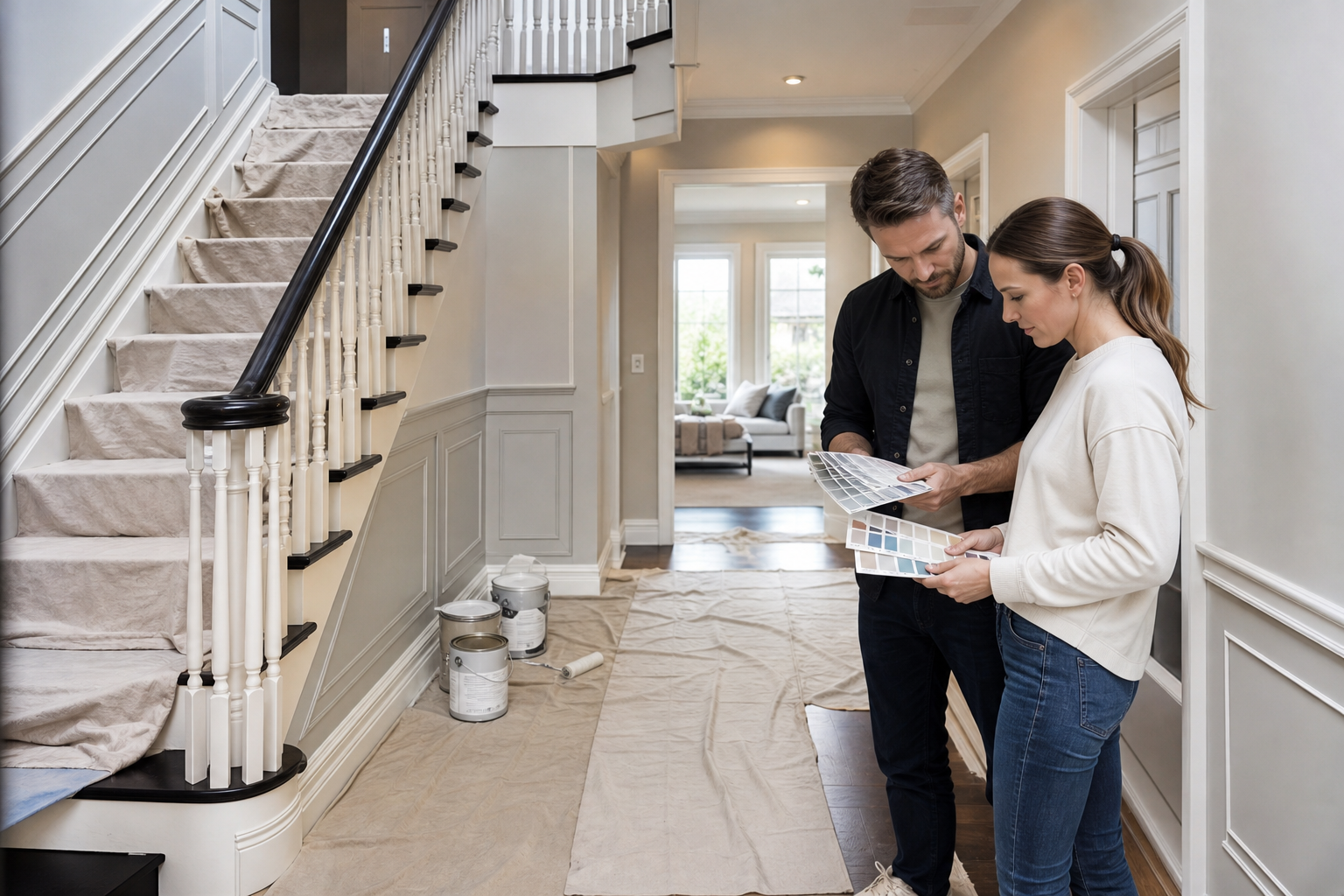
Hallways, staircases and landings do more than connect rooms. They create a first impression, frame the journey through the home and are seen repeatedly throughout the day. Because these spaces flow into one another, even one well-planned improvement can change how the front and centre of the house feels.
Wall panelling works especially well here because it adds detail without relying on heavy decoration. It can bring shape to plain walls, make proportions feel more deliberate and help busy circulation areas look more refined.
Hallways often benefit from stronger definition and a more welcoming entrance.
Staircases gain visual flow when the panel layout follows the rise of the stairs properly.
Landings feel more connected to the rest of the home when the finish continues naturally upstairs.
For many Berkshire homeowners, these are the spaces that make the house feel either well considered or slightly unfinished. Panelling can bridge that gap when it is planned around the architecture rather than copied directly from an online photo.
Where wall panelling works best in hallways, stairs and landings
Hallways
Hallways are often the easiest place to introduce decorative panelling because the wall lines are usually clearer and the design can immediately lift the entrance to the home. Lower wall panelling is a common choice here because it brings structure to the space while leaving enough painted wall above to keep the area light.
It works particularly well when you want to:
make a plain hallway feel more purposeful
create a stronger link between the front door, skirting and architraves
give a wider hallway a more tailored look
add interest without making the space feel cluttered
In narrower entrances, simpler layouts usually work better than heavily detailed designs. Clean lines, sensible spacing and the right paint finish often create a smarter result than trying to fit too much detail into a small area.
Staircases
Staircases can look excellent with panelling, but they need more planning than a flat hallway wall. The rise of the stairs, the angle of the handrail, the turns in the staircase and the visibility from below and above all affect the final result.
Good staircase panelling should feel intentional from every angle. The panel spacing needs to work with the slope of the stairs, and the finish around edges, corners and trim needs to stay crisp. This is one reason many homeowners prefer to discuss panelling as part of a full stairs and landings decorating plan rather than as a separate afterthought.
When the design is right, staircase panelling can make the whole route upstairs feel more elegant and joined up.
Landings
Landings are sometimes overlooked, but they are important because they tie the upper floor back to the staircase below. If the landing is left plain while the hallway and stairs are dressed more carefully, the finish can lose momentum.
Panelling on a landing often works best when it:
continues the visual line from the staircase
frames bedroom and bathroom doors neatly
balances larger wall areas that might otherwise feel empty
helps the upstairs space feel consistent with the rest of the home
In some homes, the best answer is to continue the same lower panelling style upstairs. In others, it is better to stop in a logical place and let paint, woodwork and lighting do the rest. The right choice depends on the proportions of the property, not a fixed rule.
What homeowners should plan before fitting wall panelling
Before choosing a style, it is worth stepping back and looking at the practical side. The most successful projects are usually the ones where layout, decoration and access have all been considered early.
1. Wall condition and straightness
Panelling can highlight imperfections if the existing surface is uneven. Older walls, cracks, previous repairs and inconsistent lines all need to be assessed before any decorative finish goes on. Preparation matters just as much here as it does in painting and decorating.
2. Panel height and proportion
One of the biggest decisions is how high the panelling should go. Too low, and it can look token. Too high, and it can dominate the space or fight against doors, windows and the staircase line. The best height usually relates to existing features such as skirting, architraves, handrails and ceiling height.
3. Corners, sockets and other awkward details
Hallways and stairwells rarely offer long, uninterrupted walls. There may be radiators, alarm panels, sockets, light switches, loft hatches or tight returns. These details affect the layout and need to be planned into the design rather than worked around at the last minute.
4. Colour and light
The paint colour you choose for the panelling and the wall above it will change how spacious the area feels. Lighter schemes can help darker hallways feel calmer and more open, while deeper colours can add richness in larger or brighter spaces. The right finish depends on natural light, the size of the area and the overall look you want through the house.
5. Access and working at height
Stairs and landings are more difficult to work in than flat rooms. Access, protection and careful sequencing are all important, especially where higher walls and stairwells are involved. This is another reason it often makes sense to approach the space as one coordinated project instead of splitting it into disconnected jobs.
6. Whether it is part of a wider decorating scheme
Panelling looks best when it belongs to the whole space. If ceilings, bannisters, woodwork or the upstairs walls also need attention, it can be more efficient to plan the project alongside broader whole-house redecoration services or a targeted hallway and staircase refresh.
Choosing the right style for your home
There is no single style that suits every Berkshire property. The best result usually comes from matching the design to the scale and character of the space.
Simple square or rectangular layouts
These are popular because they feel neat, balanced and versatile. They work well in both newer homes and more traditional interiors, especially when the aim is to create a clean, premium finish without making the space feel busy.
More traditional detailing
Homes with period influences may suit a slightly more decorative look, but the detailing still needs restraint in stairwells and narrow passageways. Too much complexity can make the area feel crowded.
Full-height versus lower panelling
Full-height panelling can make a strong statement, but it is not always the right choice for hallways and landings. Lower panelling is often more flexible because it gives you a clear decorative feature while keeping the upper wall lighter and more open. The right answer depends on proportions, lighting and how much visual weight the space can carry.
Common mistakes to avoid
If you want a polished result, these are some of the most common issues to avoid:
Choosing a design before measuring the space properly. Inspiration images do not account for your exact wall lengths, turns and staircase angles.
Ignoring sightlines. The view from the front door, the bottom of the stairs and the landing all matter.
Using panel sizes that are out of scale. What looks elegant in a tall stairwell may feel cramped in a smaller hallway.
Treating panelling as separate from the decorating. The final look depends on preparation, caulking, painting and how cleanly everything ties in together.
Leaving colour choices until the end. Panelling and paint need to work as one scheme, not as separate decisions.
Why combine wall panelling with professional decorating
Panelling only looks premium when the surrounding finish is handled properly. Sharp lines, smooth filling, careful preparation and a consistent paint finish are what turn a good idea into a result that feels right for the home.
At SJA Painting and Decorating Services, we are a small independent business based in Bracknell, serving homeowners across Berkshire and nearby towns. We focus on larger domestic projects, high-end residential finishes and clear communication from the outset. If required, we can also quote to supply materials as part of the job.
Homeowners often come to us when they want one experienced point of contact for the decorating side of the project, whether that is standalone wall panelling and decorating services or part of a wider interior refresh. With five years of experience and a focus on reliable, professional service, we take care to make sure the finished space feels considered from the bottom of the stairs to the top landing.
FAQs about wall panelling in Berkshire
Is wall panelling suitable for hallways and stairs in older Berkshire homes?
Yes, in many cases it works very well. The key is to plan the layout around the property’s proportions and existing features rather than forcing a standard design into an uneven or characterful space.
What height should hallway wall panelling be?
There is no single rule. The most effective height usually depends on the skirting, door frames, ceiling height and the visual line you want through the hallway and staircase. A home visit is often the easiest way to judge what will look balanced.
Can wall panelling work in a small or dark hallway?
Yes, provided the design stays in proportion. Simpler panel layouts and well-chosen paint colours can add detail without making the space feel heavy.
Should wall panelling be planned before painting the stairs and landing?
Usually, yes. Panelling affects preparation, layout, paint lines and the overall finish. Planning the decorating together normally gives a cleaner and more cohesive result.
Do you cover areas outside Bracknell?
Yes. We are based in Bracknell and work across Berkshire and nearby towns, including Windsor, Ascot, Maidenhead, Wokingham and Woodley.
Conclusion
Wall panelling can transform a hallway, staircase or landing, but the result depends on more than the style you choose. Proportion, preparation, access and the overall decorating scheme all matter if you want the finished space to feel balanced and well executed.
If you are planning wall panelling in Berkshire, we can help you assess where it will work best, how it should flow through the space and what should be included to achieve a polished finish.
Book a home visit with SJA Painting and Decorating Services to discuss wall panelling and decorating options for your hallway, stairs or landing in Bracknell or the surrounding Berkshire area.