

Small ceiling details make a big visual difference
Even finish overhead
A uniform ceiling helps the whole room feel cleaner, lighter and less obviously tired.
Neat edges at the perimeter
Careful cutting in around walls and fittings keeps the finish sharp instead of ragged.
Protection below the work
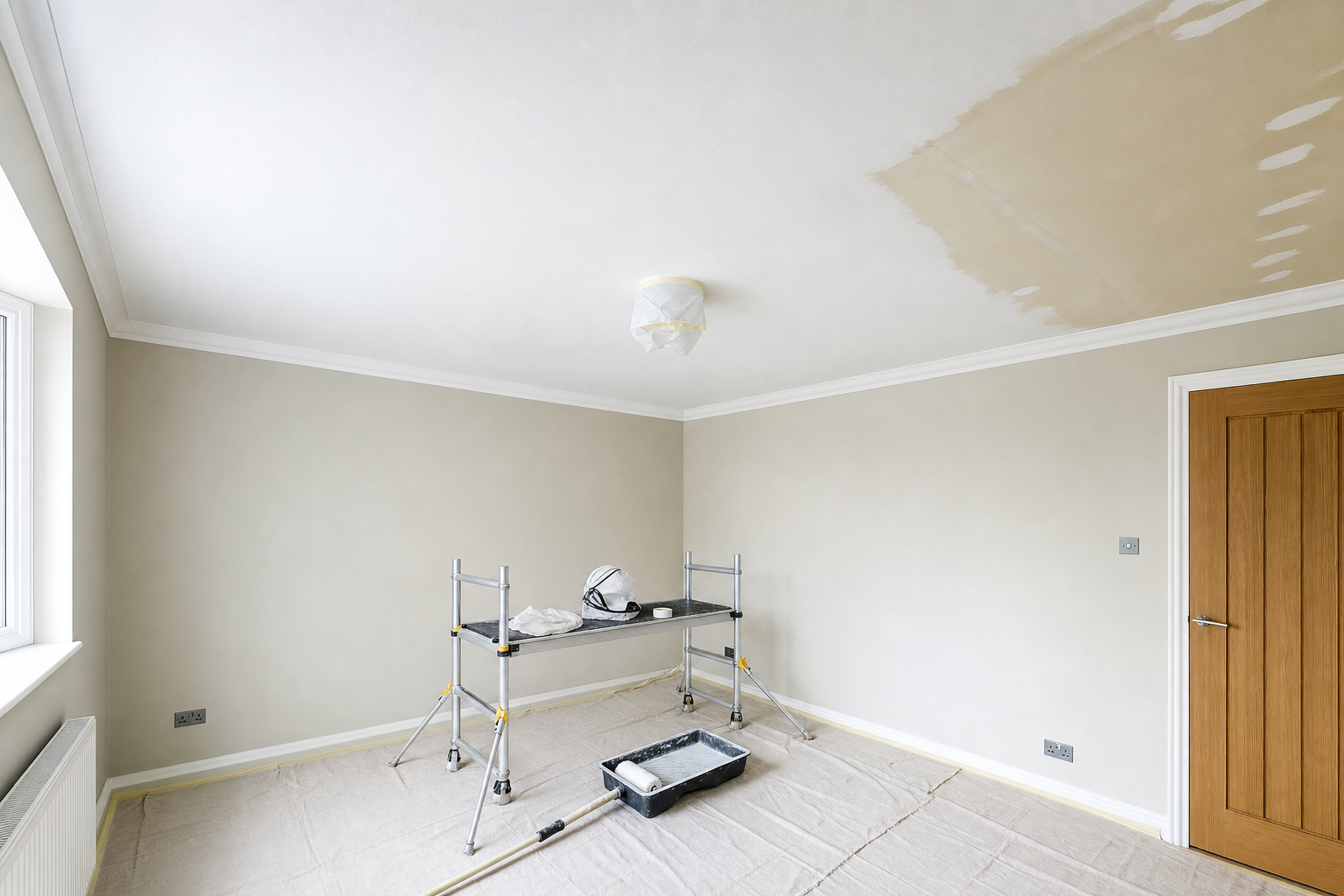
Floors, furniture and fittings are covered properly before overhead prep and painting begin.
A ceiling can quietly spoil the whole room
A marked, patchy or yellowing ceiling drags the room down even when the walls are decent. Ceiling painting is a simple idea on paper, but the finish only looks clean when the preparation is dealt with first. We prepare minor cracks, flaking paint and visible imperfections before repainting, then cut in carefully around walls, cornices, light fittings and other ceiling features for a sharp edge all the way round. With SJA Painting and Decorating Services, the aim is a uniform overhead finish that brightens the space instead of reminding you where the old problems were.
Finish choice and protection matter overhead
Ceilings benefit from the right product as much as the right brushwork. In many rooms, a flatter finish helps reduce glare and softens the appearance of minor texture, which can make the ceiling look calmer once the light hits it. Because the work is overhead, we also plan proper protection for floors, furniture and fittings before any preparation or painting begins. A quotation from SJA Painting and Decorating Services can form part of a wider decorating scheme too, so the ceiling does not end up looking fresh while the rest of the room still waits its turn.
Frequently asked questions
What ceiling problems can be dealt with before painting?
Minor cracks, flaking paint and small surface imperfections can usually be prepared before repainting. The exact approach depends on the condition of the ceiling, but the main aim is to stop obvious defects showing straight through the new finish once the room is lit again.
Which paint finish works best on a ceiling?
A flatter finish is often a sensible choice because it helps reduce glare and does not draw as much attention to minor texture. The best option still depends on the room and the surface condition, but quieter finishes often suit ceilings better than anything too shiny.
Do you protect the room during overhead work?
Yes. Because preparation and painting are happening above everything else, floors, furniture and fittings need proper protection before the work starts. That is part of keeping the job tidy and making sure the fresh ceiling is the thing you notice afterwards, not the mess left below it.